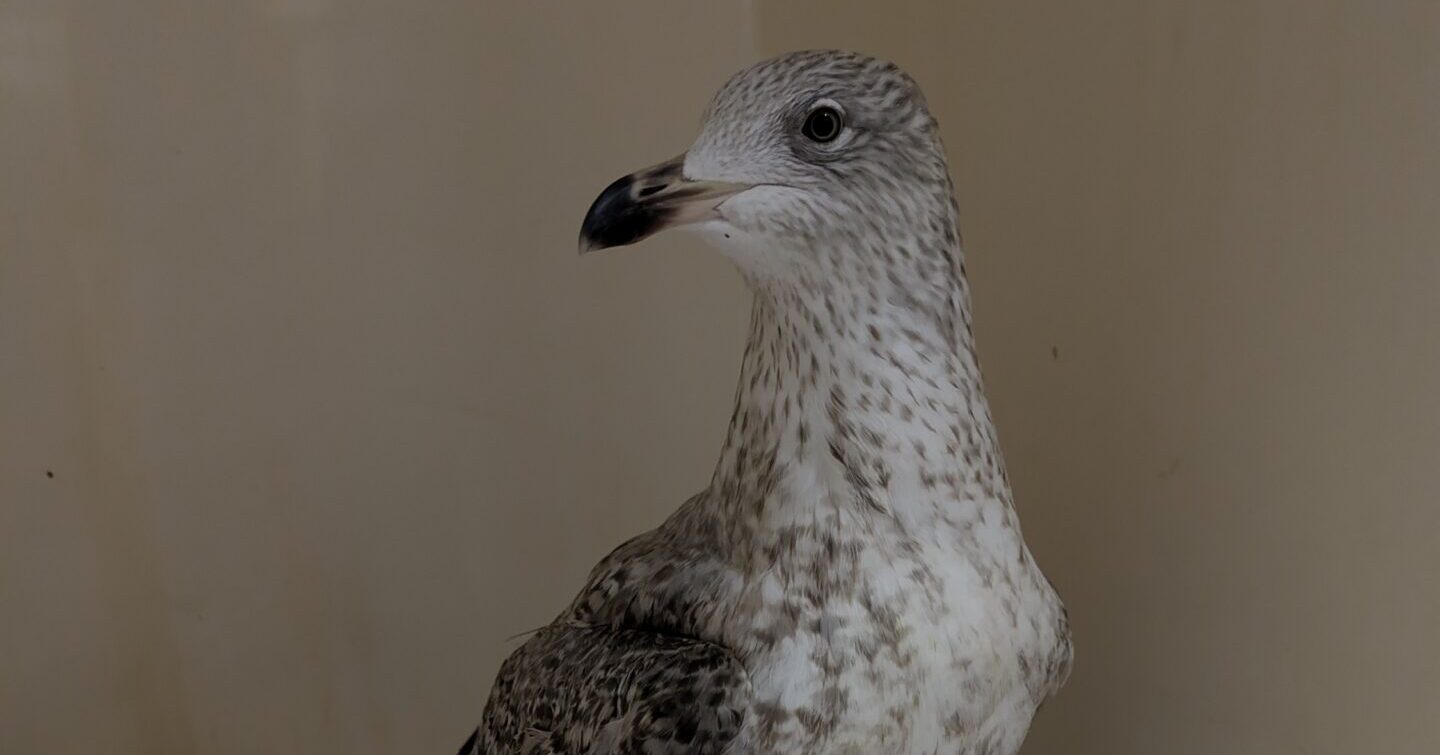
Night-time water rescue saves entangled gull at Hailsham Common Pond
A evening walk for a couple enjoying the early signs of spring, resulted in – what turned out to be – a rather dramatic rescue for the East Sussex Wildlife…
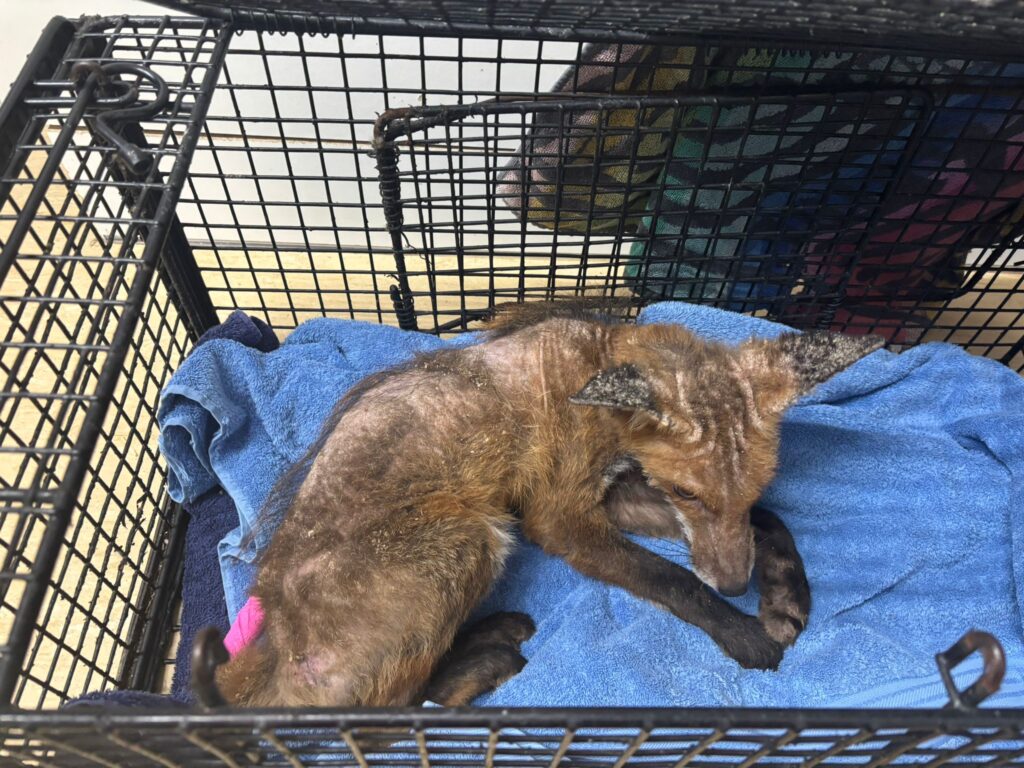
On Tuesday 17th February, rescuers from East Sussex WRAS were called to a severely manged fox trapped in a basement beneath a residential property. A cage trap had been in place for a week without success. Residents were understandably relieved when they suddenly discovered the fox inside their basement and were able to quickly shut the door, […]
On Tuesday 17th February, rescuers from East Sussex WRAS were called to a severely manged fox trapped in a basement beneath a residential property.
A cage trap had been in place for a week without success. Residents were understandably relieved when they suddenly discovered the fox inside their basement and were able to quickly shut the door, safely containing him.
In near darkness, WRAS rescuers had to carefully move stored items to gain access. The fox had wedged himself into the furthest, smallest gap he could find. Working from above and behind, the team were able to gently secure him using a dog grasper and lift the very thin, exhausted animal into a waiting cage.
Back at their Casualty Centre, the fox — later named “Dobby” (after the much-loved character from the Harry Potter films) — was triaged, given initial medication, and settled for the night. He was underweight, dehydrated, and suffering from extensive mange, with bald, crusted skin.
The following morning, the care team sedated Dobby for a full examination. During checks, damage to his tail was identified, and x-rays under general anaesthetic confirmed the need for surgery. WRAS’s specialist vets recommended amputation of the lower section of his tail.
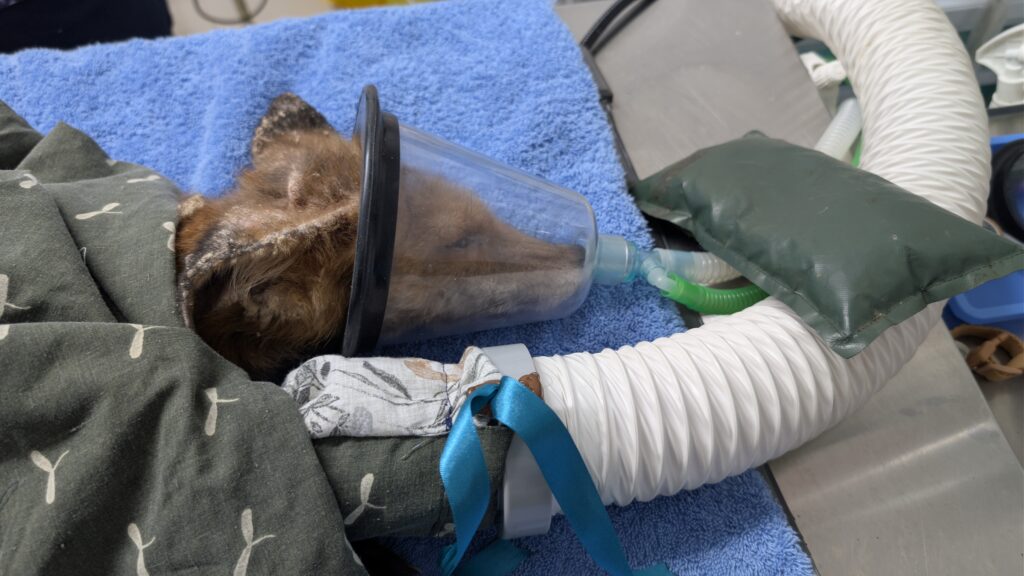
When amputating a fox’s tail, it’s essential to ensure enough remains to protect the genital area and help with balance — something our experienced veterinary team carefully considered.
After just over a week of supportive care, mange treatment, and nutritional build-up, Dobby was strong enough for surgery. The procedure took less than 20 minutes, with continuous monitoring throughout. His tail was bandaged and he was closely observed during recovery before returning to his indoor pen.
He is now adjusting well to life without the damaged section of tail. His mange treatment is progressing positively, and he continues to gain strength.
The team will keep monitoring him closely, and once fully recovered, Dobby will be returned to his home range and released back into the wild — where he belongs.
WRAS would like to extend their thanks to the residents who acted quickly and called for help, and to our supporters who make this level of specialist wildlife veterinary care possible.