24 hr Rescue Hotline:
0300 10 26 999

Inside WRAS's Specialist Deer Rescue Team

When a deer becomes trapped, every moment matters.

A fallow buck with its antlers caught in fencing. A deer trapped in a confined space. An animal dragging metres of netting through woodland.

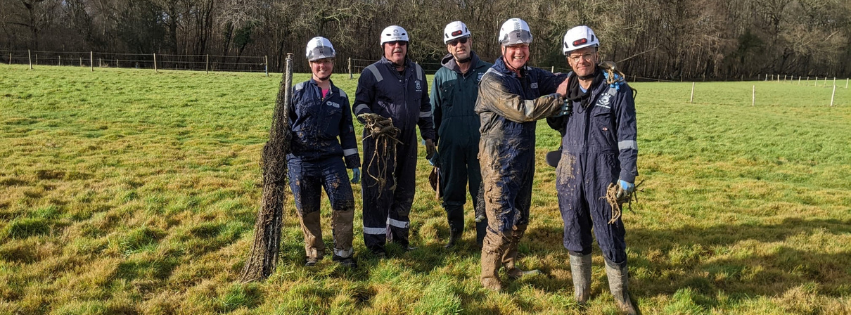
These are just some of the difficult and potentially dangerous situations faced by East Sussex Wildlife Rescue & Ambulance Service's specialist Deer Rescue Team.

Deer are powerful, unpredictable wild animals. When frightened, they can injure themselves or the people attempting to help them. Rescues therefore require specialist equipment, careful planning, experienced rescuers and a team that can react quickly when circumstances change.

Behind every successful release is far more work than the few dramatic minutes you might see on camera.

This page takes you behind the scenes of our deer rescue work, introduces the people involved and explains what it takes to give these magnificent animals another chance.
A growing need for specialist deer rescue

WRAS's deer rescue work dates back more than two decades.

Our first deer entanglement rescue took place in Dallington Forest in 2004. The following year, we were called to Cross-in-Hand to help a buck caught on a rope swing.

In those early years, WRAS might deal with only one or two deer incidents annually.

Today, our work has expanded considerably.

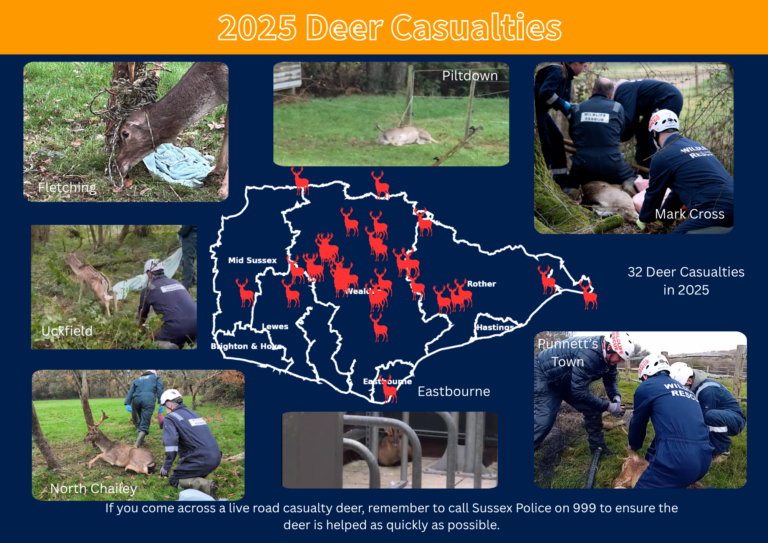
Our records show an increasing number of incidents, with 32 deer casualties reported in 2025. These involve much more than antler entanglements, including deer trapped in fencing, confined spaces and other dangerous situations.

As demand has grown, WRAS has developed a larger specialist team, supported by experienced Deer Rescue Leads who can coordinate incidents and help ensure that the right people and equipment are available.

Our aim is always to help these animals as safely and swiftly as circumstances allow, returning them to the wild wherever possible.
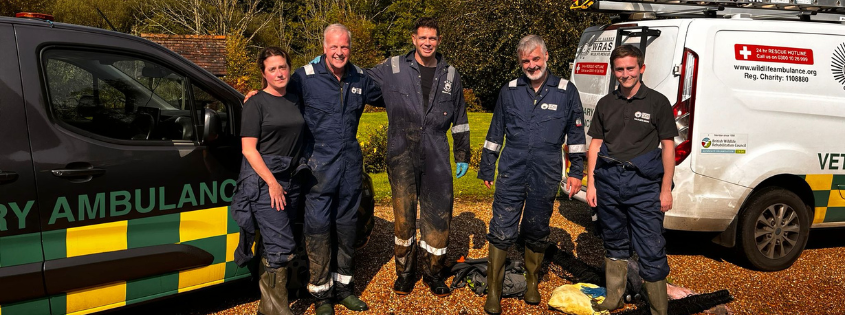
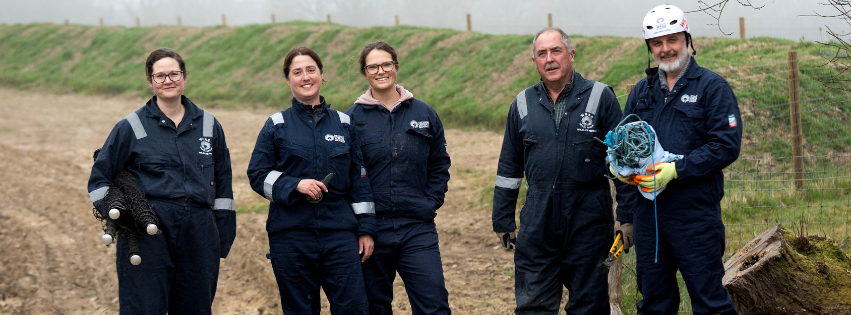


Meet the people behind the rescues

Three interviews exploring why the team exists, how rescues are coordinated and what the experience means to those taking part. Trevor Weeks, Thea Taylor and Brian Downing are just three of a group of dedicated volunteers within East Sussex WRAS's Deer Rescue Team.
 

Trevor Weeks - Founding Director & Deer Rescue Lead

WRAS's deer rescue work began in 2004 with an entangled deer in Dallington Forest. Since then, demand has grown considerably, leading to the development of our specialist Deer Rescue Team.

In this first interview, WRAS Founder Trevor Weeks MBE looks back at how the team began, how its work has evolved and why rescuing deer requires a specialist approach. He explains the importance of equipment, safety and minimising stress, including the dangers of capture myopathy and why sedation isn't routinely used.

Discover how more than two decades of experience have shaped the way WRAS responds to deer in distress today.

Thea Taylor - Deer Rescue Lead

A deer rescue begins long before anyone approaches the animal. From assessing information supplied by callers to planning the rescue, every decision matters.

Meet Thea Taylor, one of WRAS's experienced Deer Rescue Leads. In this interview, Thea explains the responsibilities involved in coordinating a rescue, selecting equipment, assessing risks and ensuring everyone understands their role.

But deer rescues can change in seconds, requiring the entire team to adapt quickly and work together. Discover why careful planning, sound judgement, communication and trust are essential to protecting both the deer and the rescuers throughout these challenging operations.

Brian Downing - Deer Rescuer

Behind every successful deer rescue are people prepared to face difficult terrain, unpredictable situations and the physical demands of helping a frightened wild animal.

Meet Brian, a dedicated member of WRAS's Deer Rescue Team, who first assisted with a deer rescue in 2021 and now regularly attends incidents across East Sussex.

In this final interview, Brian shares his experiences of being part of the team, what motivates him to continue helping and what it feels like when a deer is finally released.

Discover the human side of deer rescue and the personal commitment behind those extraordinary moments of freedom.


Why Specialist Rescue Matters.

A deer caught in fencing can appear to be a relatively straightforward problem. Surely somebody only needs to approach it and cut the material away?

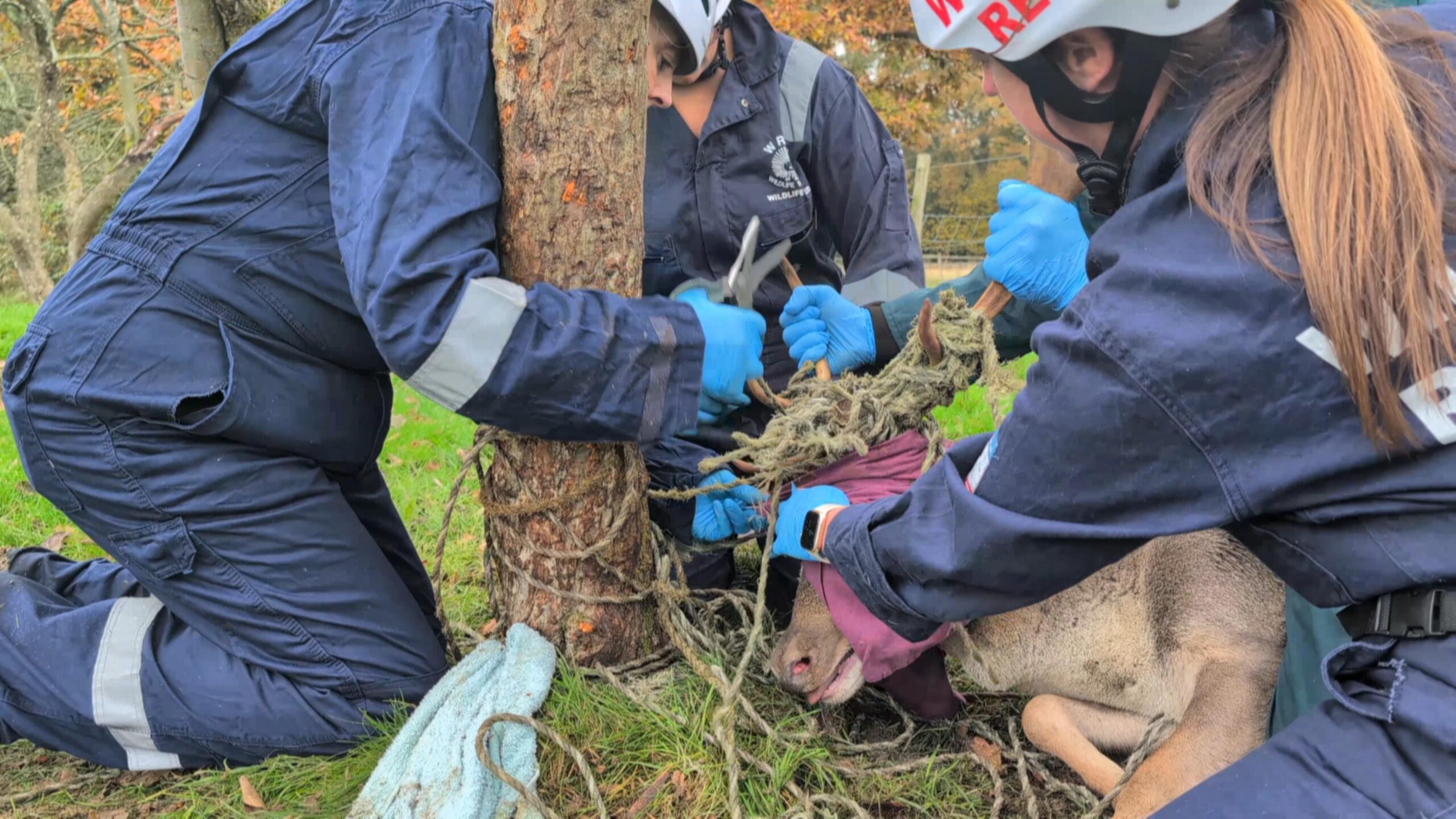
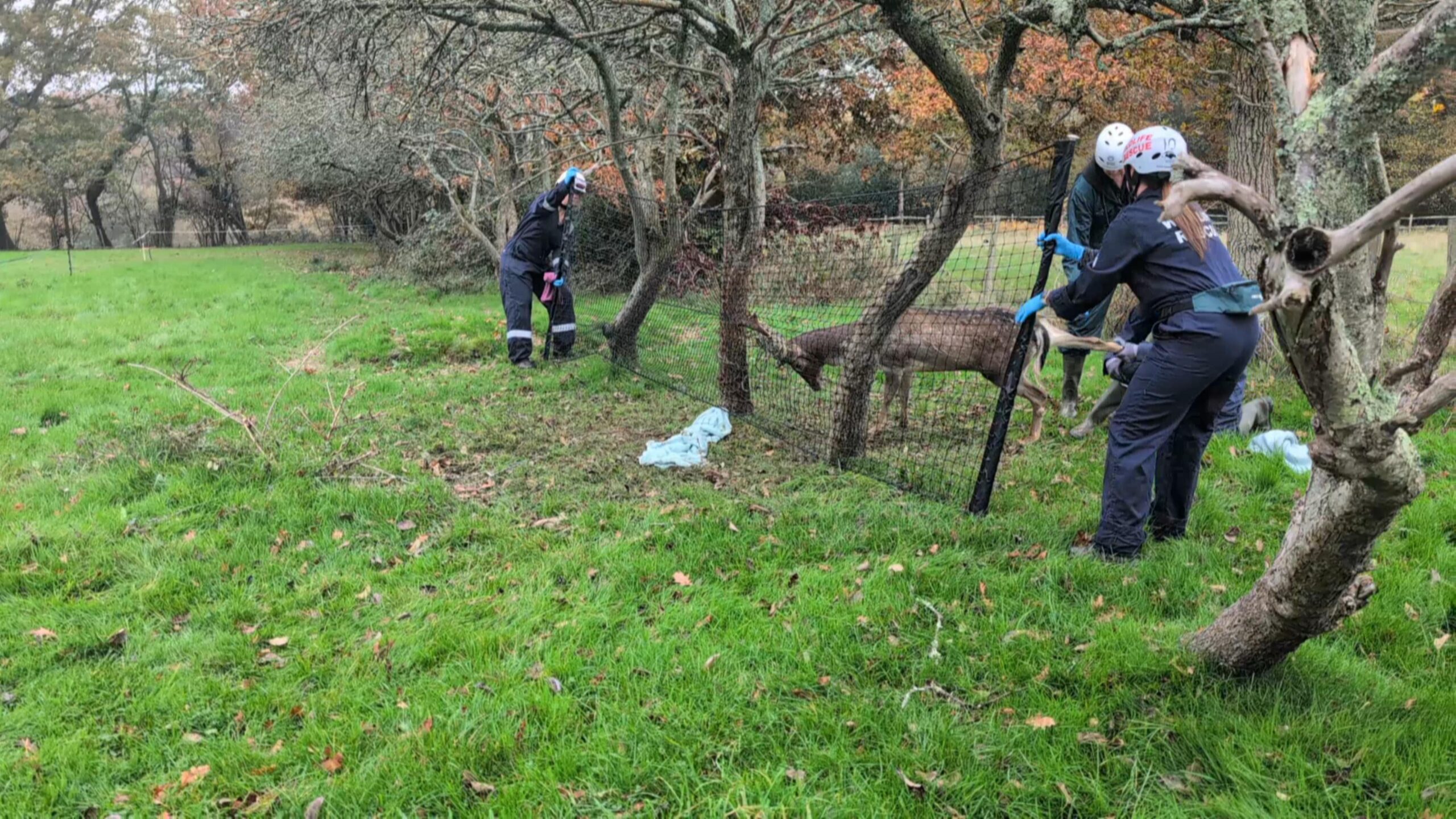
Unfortunately, it is rarely that simple. The last anyone should do is cut the material attached to the antlers and let the deer run off with the material still attached - the deer is likely to become re-entangled at some point and may not be lucky enough to be found. The animal may also panic and struggle, causing further injury. It may still be mobile, dragging fencing across fields or through woodland. Its antlers may be entangled in several different materials, requiring specialist cutting tools.

Every situation presents different challenges. Our rescuers must consider the animal's behaviour, the surrounding terrain, possible escape routes, the available equipment and the safety of everyone involved.

The way a deer is approached, captured and restrained can be just as important as removing the entanglement itself.

The team needs to be prepared for a variety of materials including, electric fencing, rope, camouflage netting, rope swings, barbed wire, chicken wire, garden netting, football goals and items attached to this material like fence posts. That is why WRAS has a Disentanglement Rucksack which contains various pieces of cutting equipment suitable for most situations.

The bag also contains safety gloves, blankets, pillow cases, first aid kits and cable ties which are often used to repair fencing if cut. The team now attends wearing safety helmets with visors for head and face protection and to prevent the risk of spreading the Blue Tongue or any other illness or virus the team wear overalls which are washed after each rescue.

Why Time Matters - Understanding Capture Myopathy.

One of the significant concerns during deer rescues is a condition known as capture myopathy.

This potentially fatal condition is associated with intense stress and exertion during capture or restraint and can cause serious muscle damage and other complications, and be fatal.

It is one of the reasons our team works to keep pursuit, handling and restraint as short as safely possible. Our rescuers have 30 minutes from the point of their approach to the point of release to avoid a heart attack or releasing a deer which is likely not to survive long after release.

Every rescue is different, but careful preparation and clear teamwork can make a substantial difference to how efficiently an animal is freed.

Our specialist approach is intended to minimise unnecessary stress while maintaining the safety of both the deer and the rescue team.

We are often asked why sedation is not routinely used during deer rescues.

Although we would never rule it out where there is a clear safety or welfare need, sedation can significantly lengthen a rescue. Time is needed for the drug to take effect and for the deer to recover afterwards, extending the period for which the animal is being handled or monitored. The process of administering sedation can also add further stress to an already frightened wild animal.

There are practical considerations too. Sedative drugs must be stored, handled and administered appropriately by suitably trained personnel, and may not always be immediately available in the field.

Where certain medicines have been used, there can also be implications if the deer is subsequently hunted and enters the human food chain. This may require the animal to be clearly identified and appropriate withdrawal periods observed.

For these reasons, our normal approach is to carry out rescues using experienced teams, specialist equipment and careful planning, with the aim of keeping capture and restraint time as short as safely possible to keep the effects of capture myopathy as low as possible.

The team's average length of a rescue is now just 7 minutes!

When A Plan Comes Together.

Even the most carefully planned deer rescue can change in an instant.

A deer may suddenly move into thick woodland, become caught on another obstacle or find an unexpected escape route. Our rescuers must continually reassess what is happening and decide whether to continue, change their approach or withdraw. Sometimes, the safest decision is not to proceed.

Knowing the limits of the team and recognising when a rescue could cause more harm than good is an essential part of specialist wildlife rescue. When an opportunity does arise, the rescuers must work together quickly, often anticipating one another's movements without needing lengthy instructions. This understanding and trust develops through training, experience and working together on real incidents.

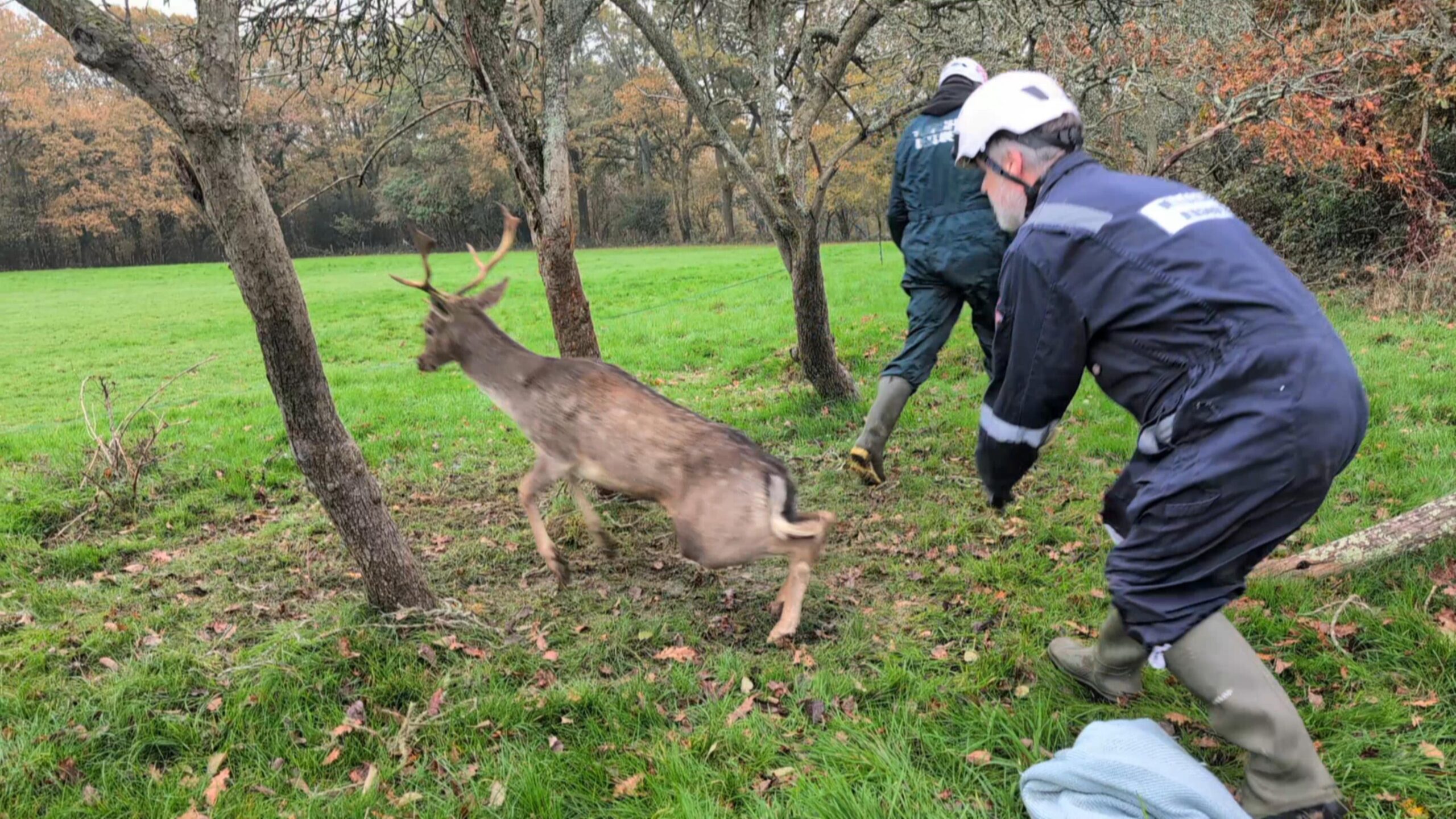
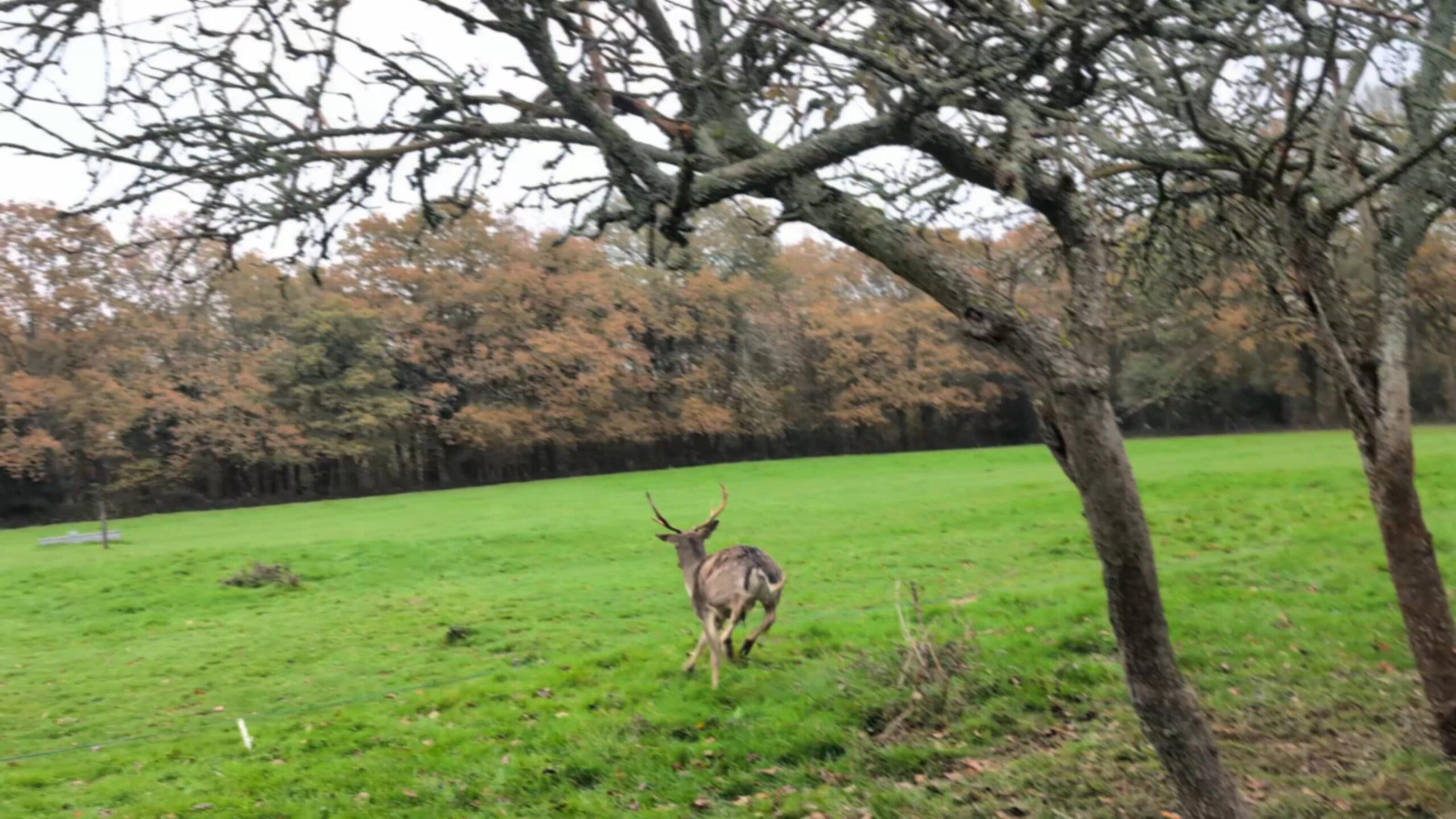
For the team, the moment a deer gets back to its feet and runs free can make all the preparation, uncertainty and hard physical work worthwhile. There is something extraordinary about watching it disappear back into its natural surroundings.

There may be relief, excitement or simply a quiet moment as the team takes in what has happened.

Then the equipment is packed away, cleaned and ready for the next call.

Tab Content

This is a basic text element.

Help us be there when deer need us most.

Our specialist Deer Rescue Team relies on trained people, protective clothing, specialist equipment and vehicles to respond to these challenging incidents. Your support helps WRAS maintain its wildlife rescue work and gives our teams the resources they need to help deer in distress. Support our wildlife rescue work.
Please click here to support our specialist rescue service

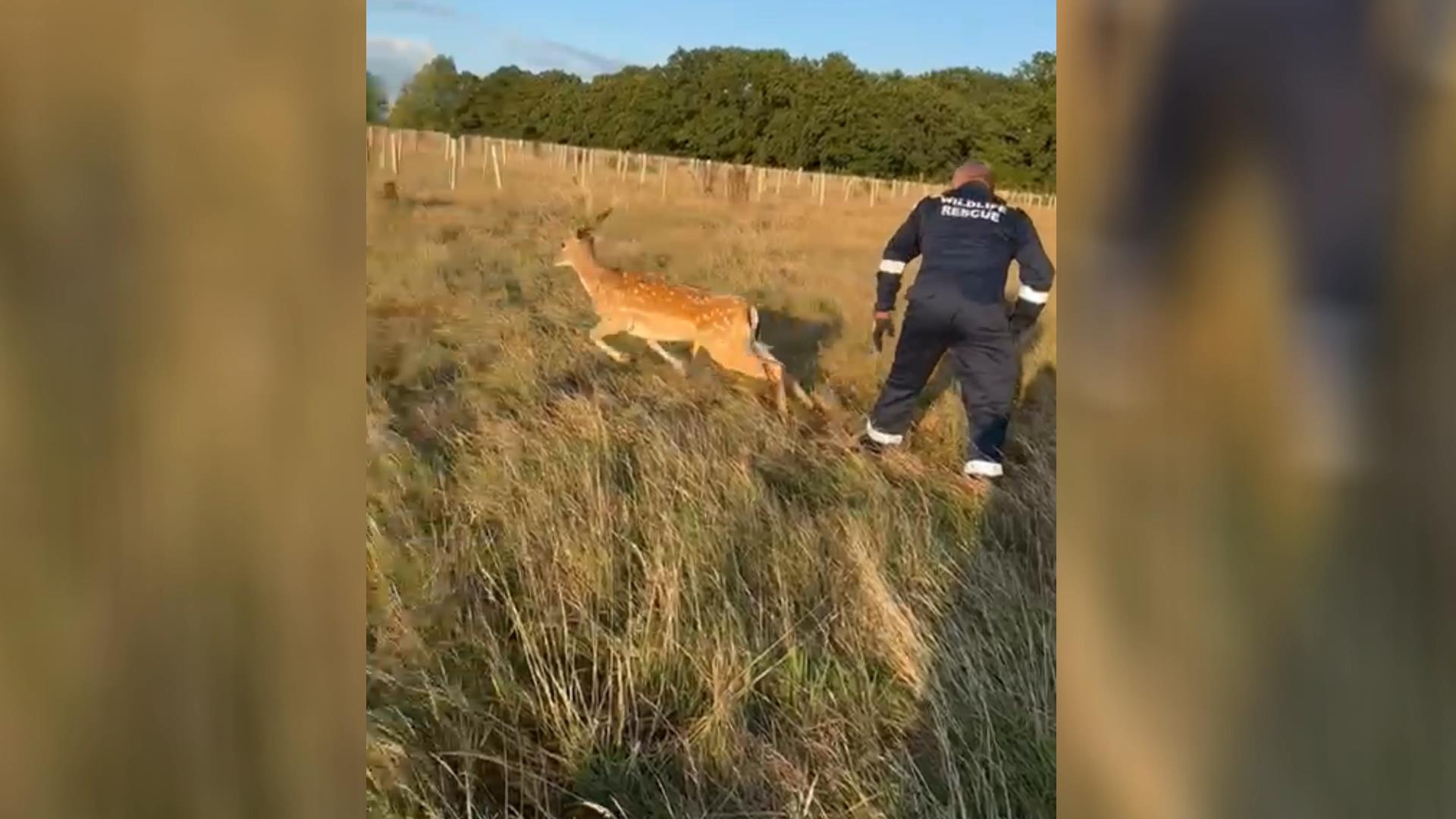
High Hurstwood Deer Rescue - 14th April 2026.

This incident was particularly challenging. With large amounts of rope and no tree or post to shorted the length, the team had to act fast to avoid capture myopathy beating the rescues to the release. 

Watch WRAS's team at work from in an amazingly challenging rescue which took just 7 minutes from start to finish. 

This is what your support makes possible.


You can watch WRAS's deer rescue team in action, along with other rescues and videos, on our charity's You Tube Channel.


What if you find a deer injured in a road accident?

Check out the advice on our Deer Advice page by clicking HERE

Copyright © East Sussex WRAS 2024.
All rights reserved.
Registered Charity No: 1108880.
Emergency Helpline
0300 10 26 999
Contact us
01825 873003
Unit 2 The Shaw Barn
Whitesmith
East Sussex.
BN8 6JD
Our Sponsors
Web Design by MJS Media.