Share Savvy Saturday!
On Saturday 1 August, East Sussex Wildlife Rescue & Ambulance Service is supporting ShareSavvy Saturday—a campaign encouraging people and organisations to think carefully about the wildlife content they like, comment on and share online.
Photos and videos of wild animals can attract a great deal of attention, but irresponsible content may unintentionally promote poor welfare, inappropriate handling, unsuitable captive conditions, harmful human–wildlife interactions, irresponsible tourism or even the illegal wildlife trade.
When wildlife content receives attention, it can encourage others to create or copy similar posts.
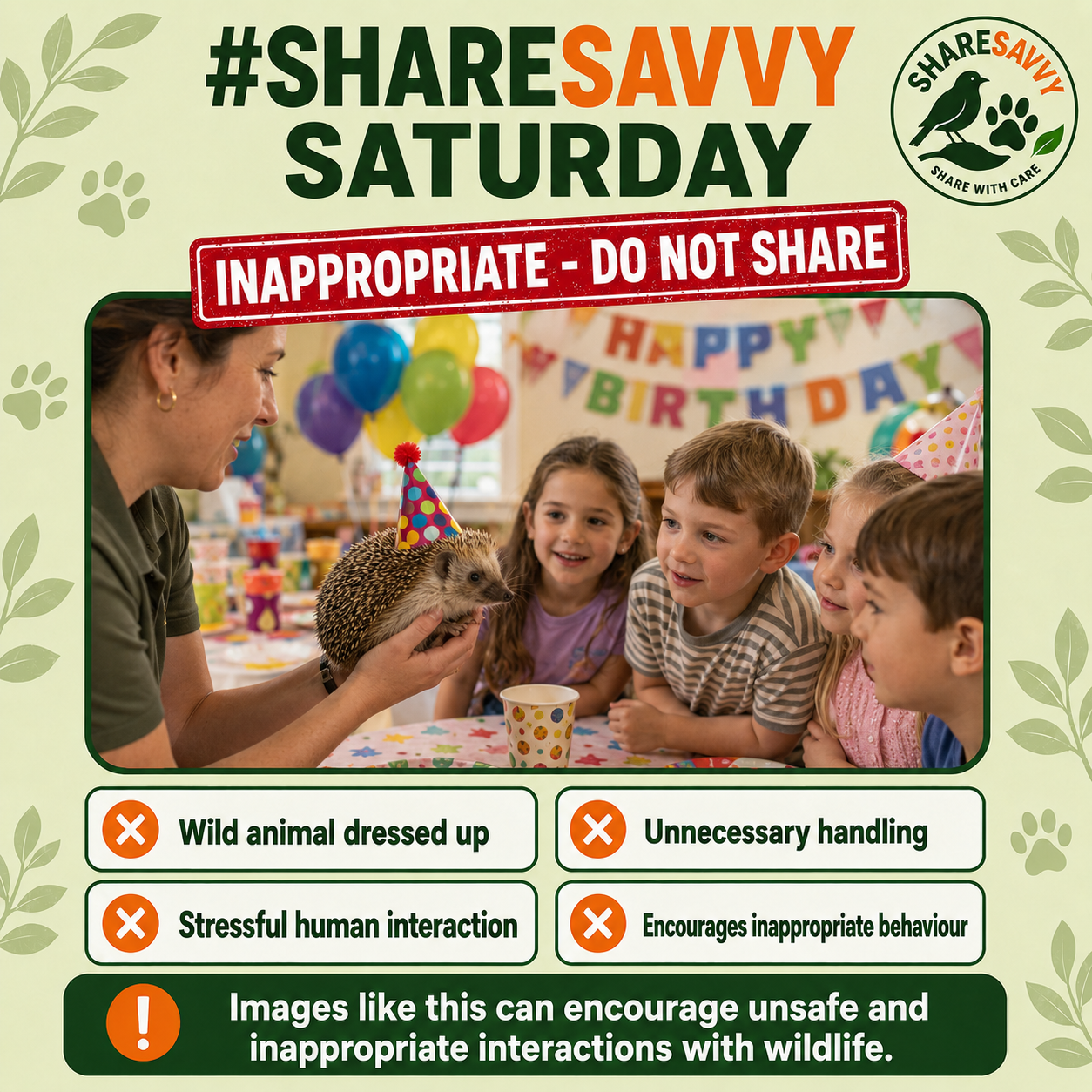
An image may appear amusing or harmless, but it could show:
Sharing such content can unintentionally reward the behaviour shown.
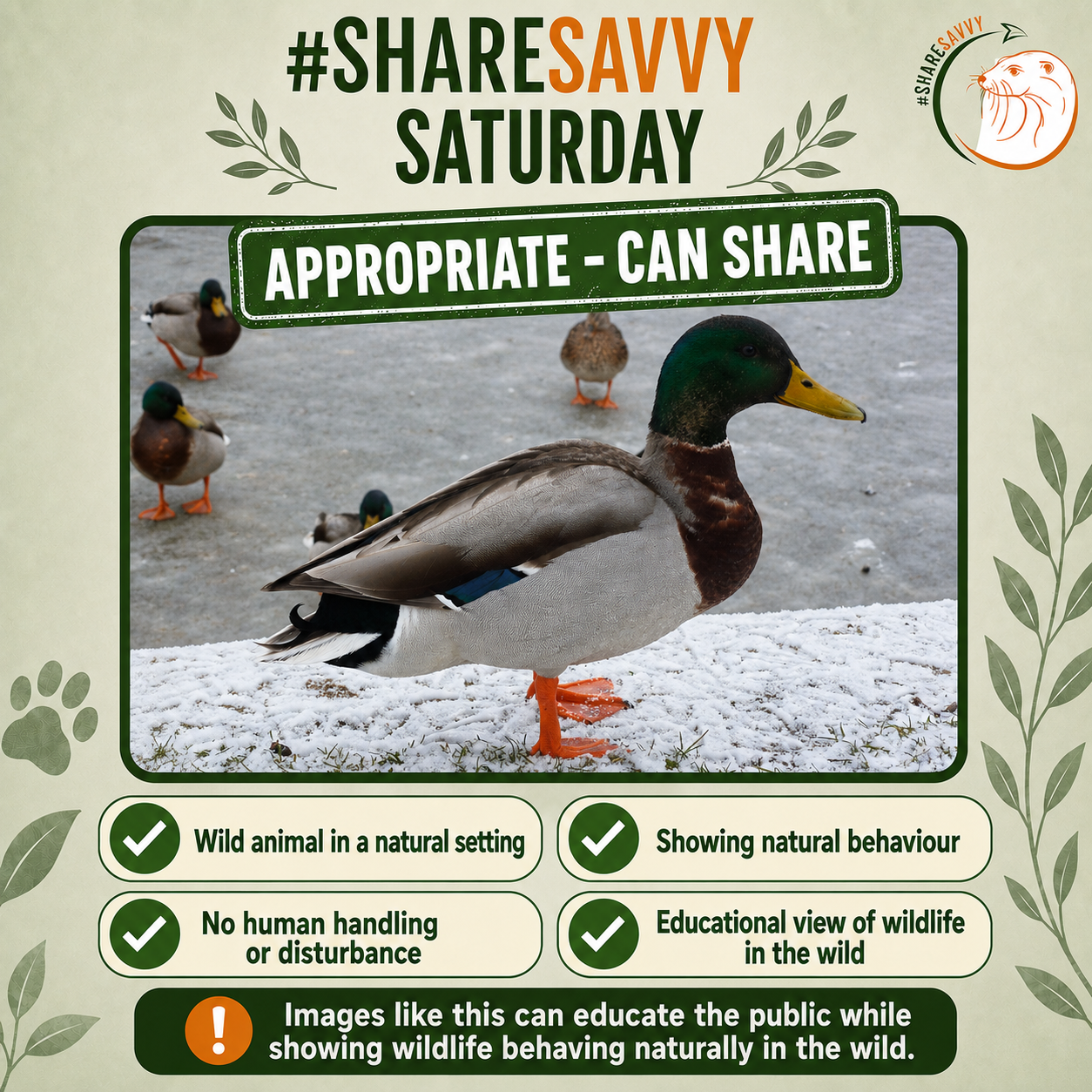
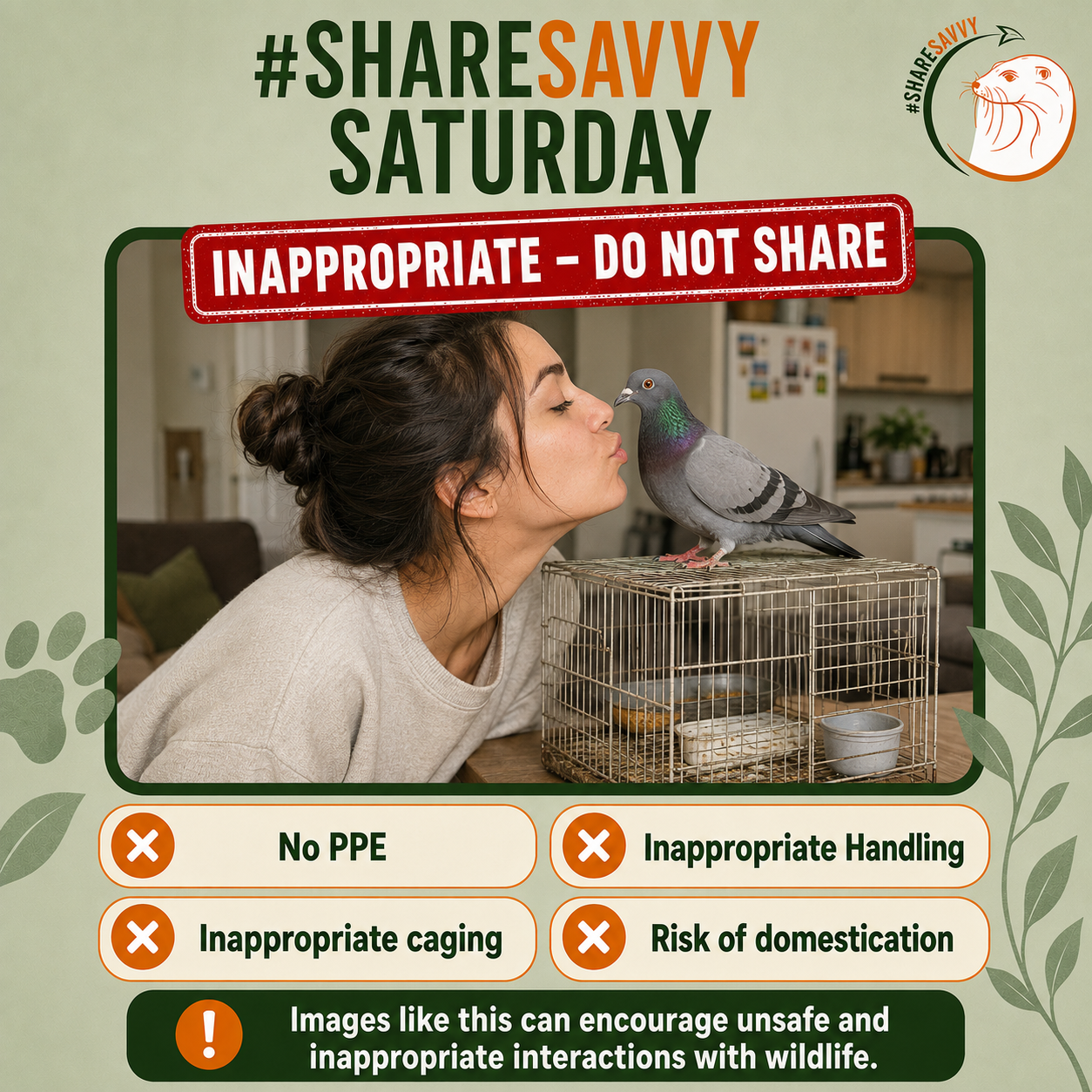
Images of wildlife behaving naturally in the wild can be positive, provided the animal has not been disturbed.
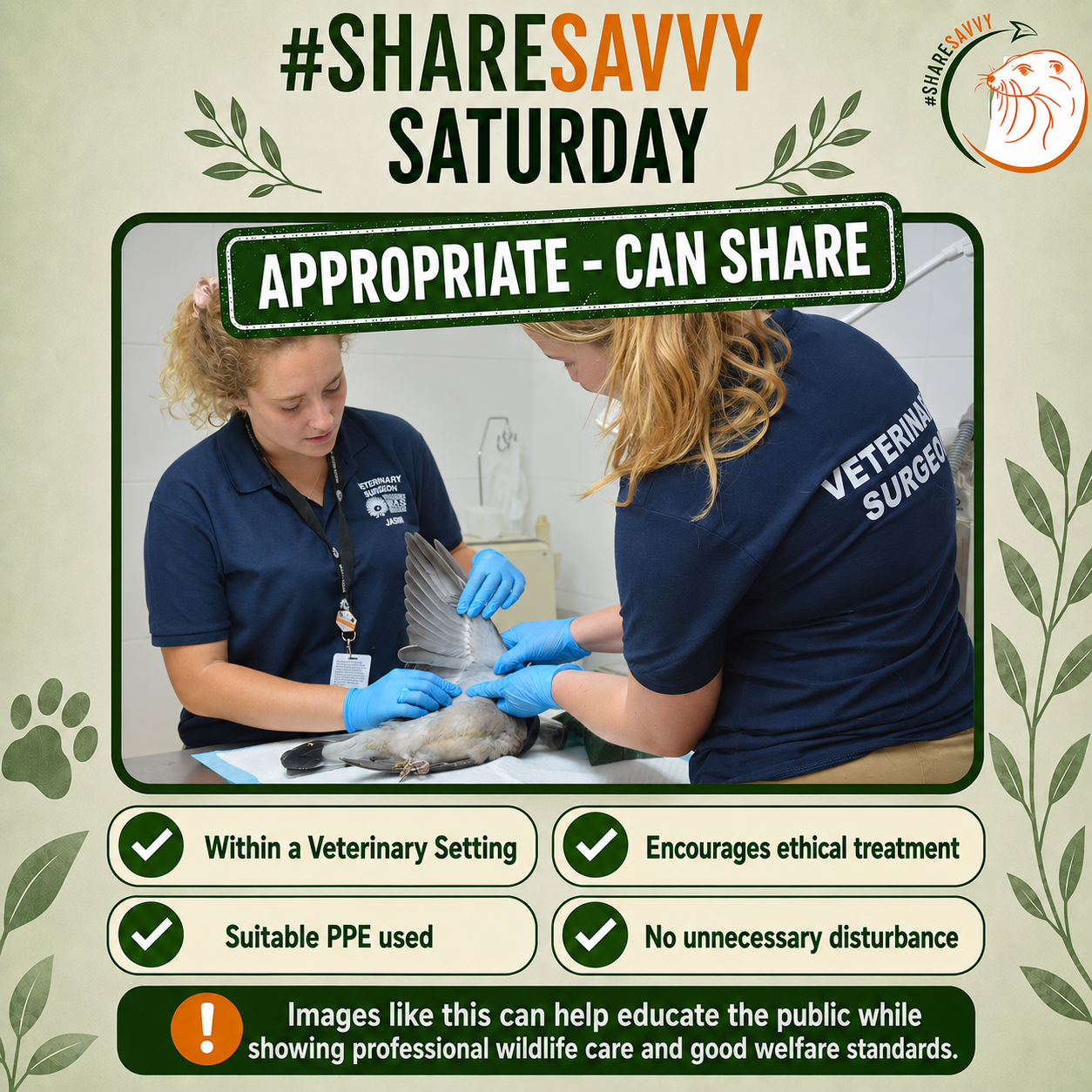
Rescue, veterinary and rehabilitation images can also be appropriate when they clearly show that:
These images can help educate people about wildlife behaviour, rescue work and professional care.
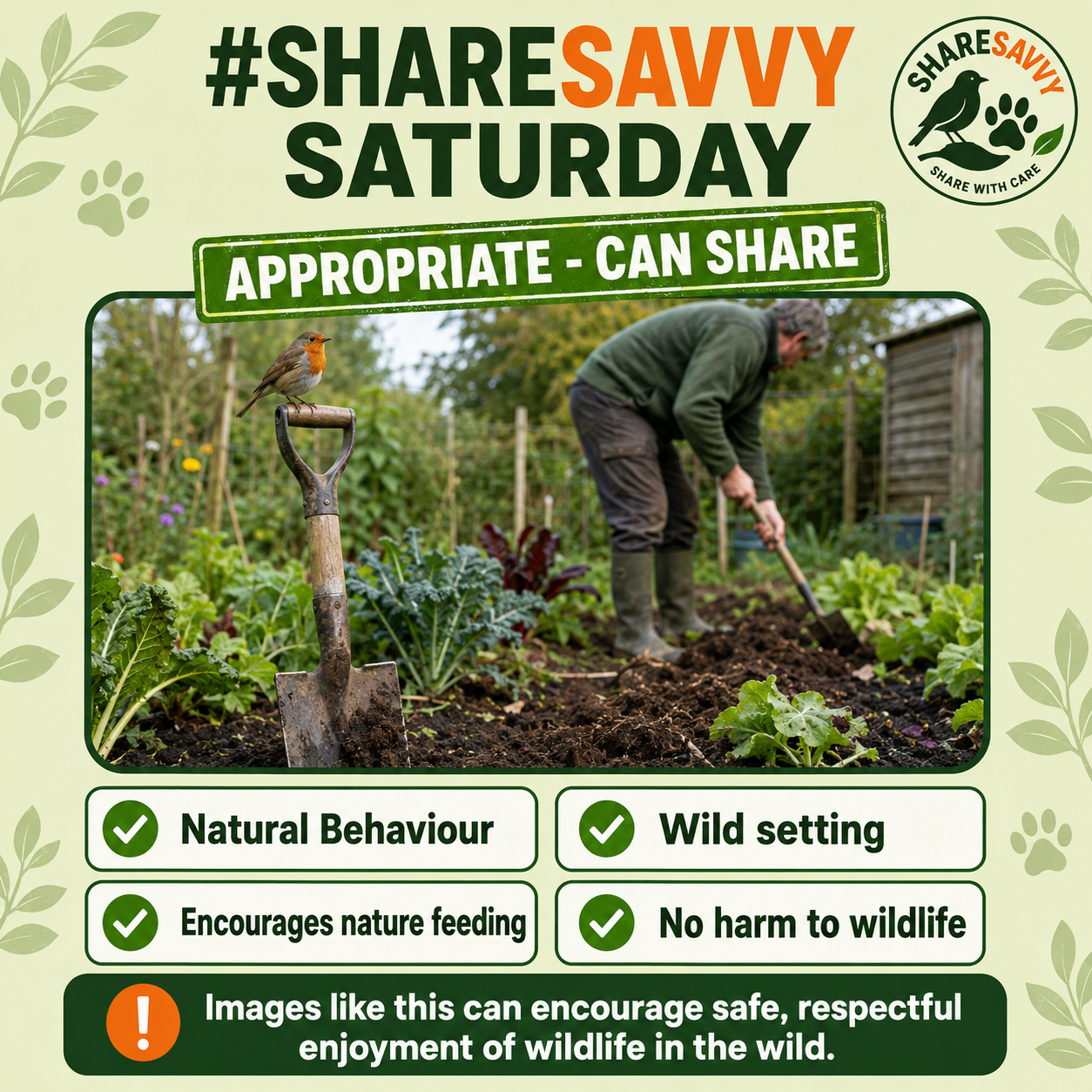
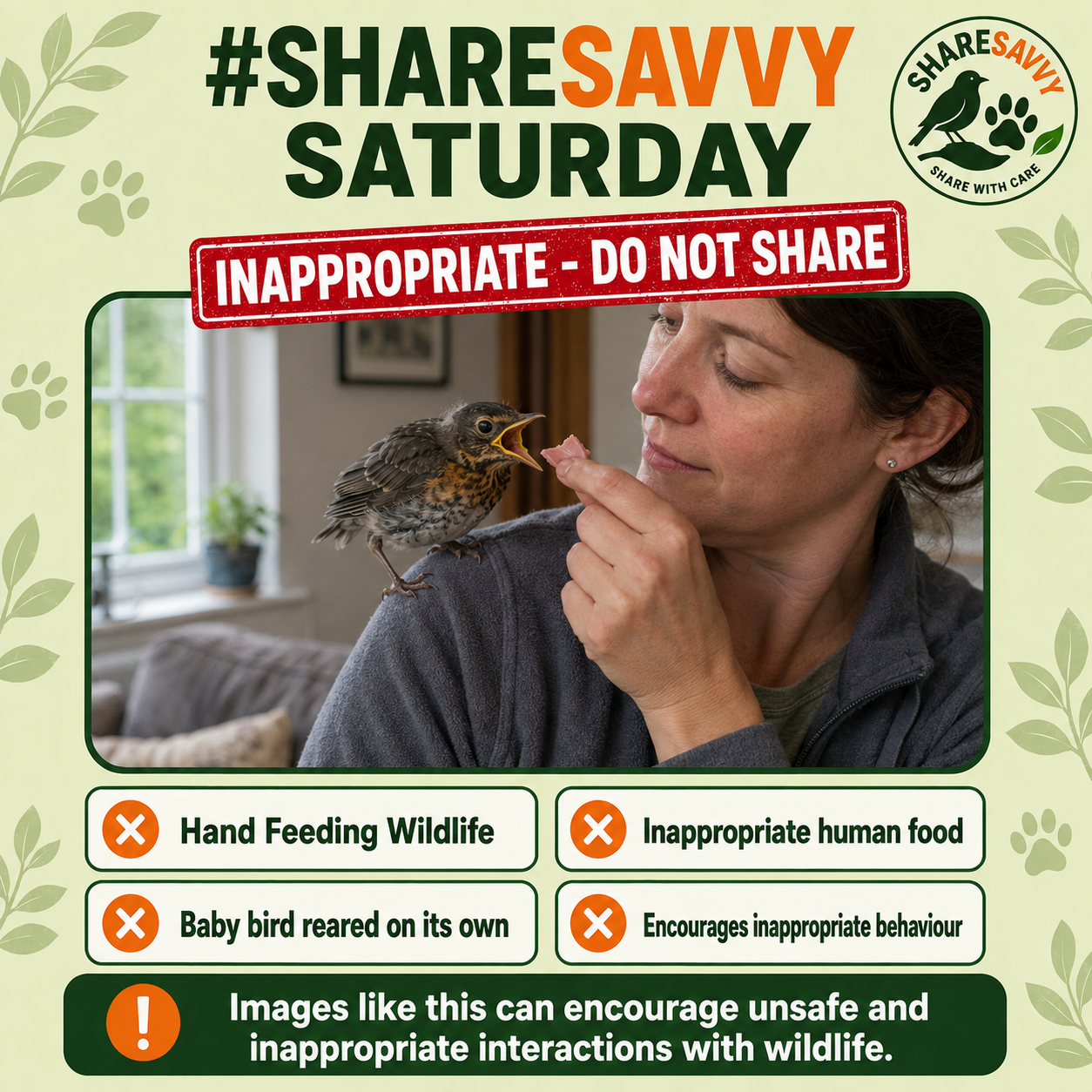
Before engaging with a wildlife post, ask:
When the context is unclear, it may be better not to engage with or share the post.
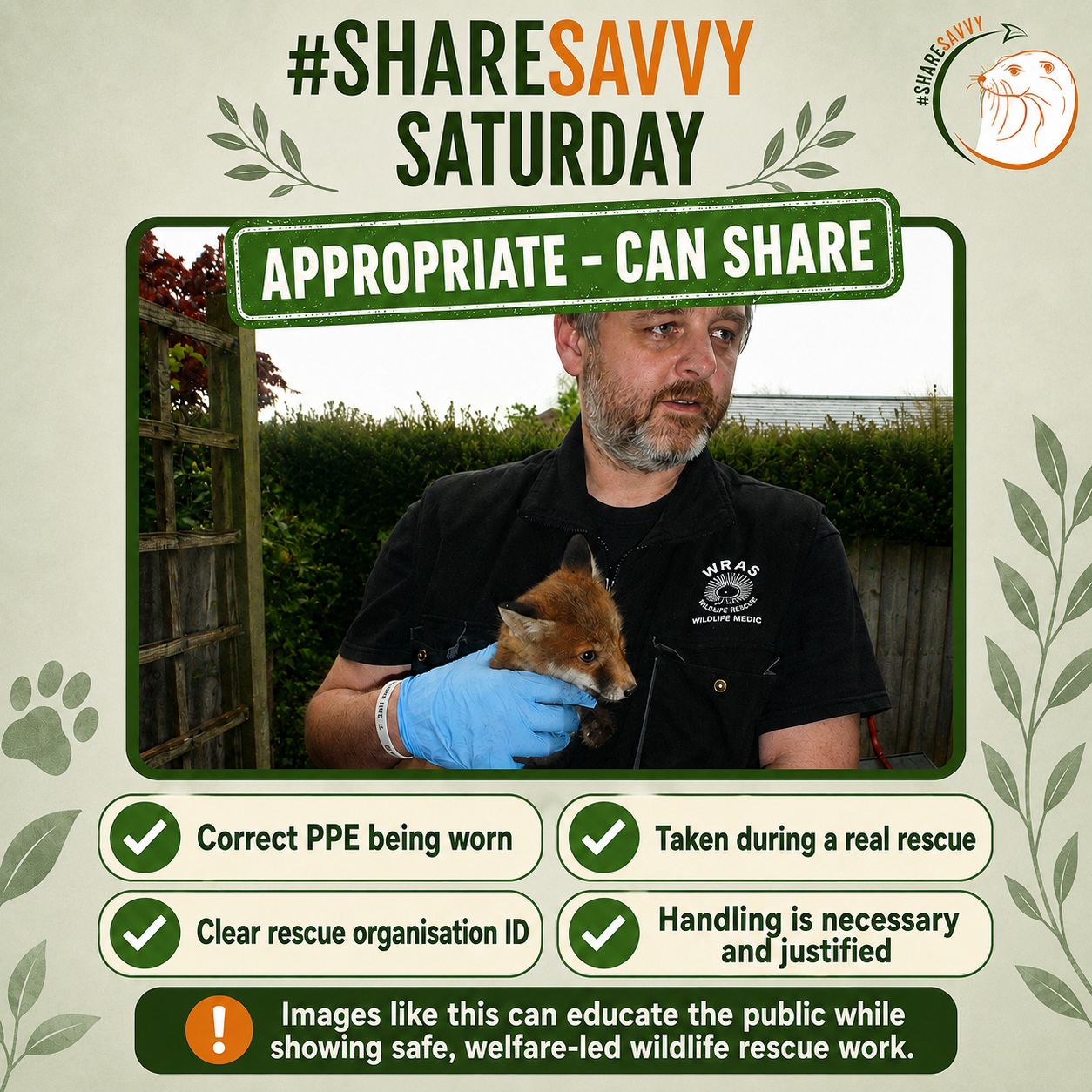
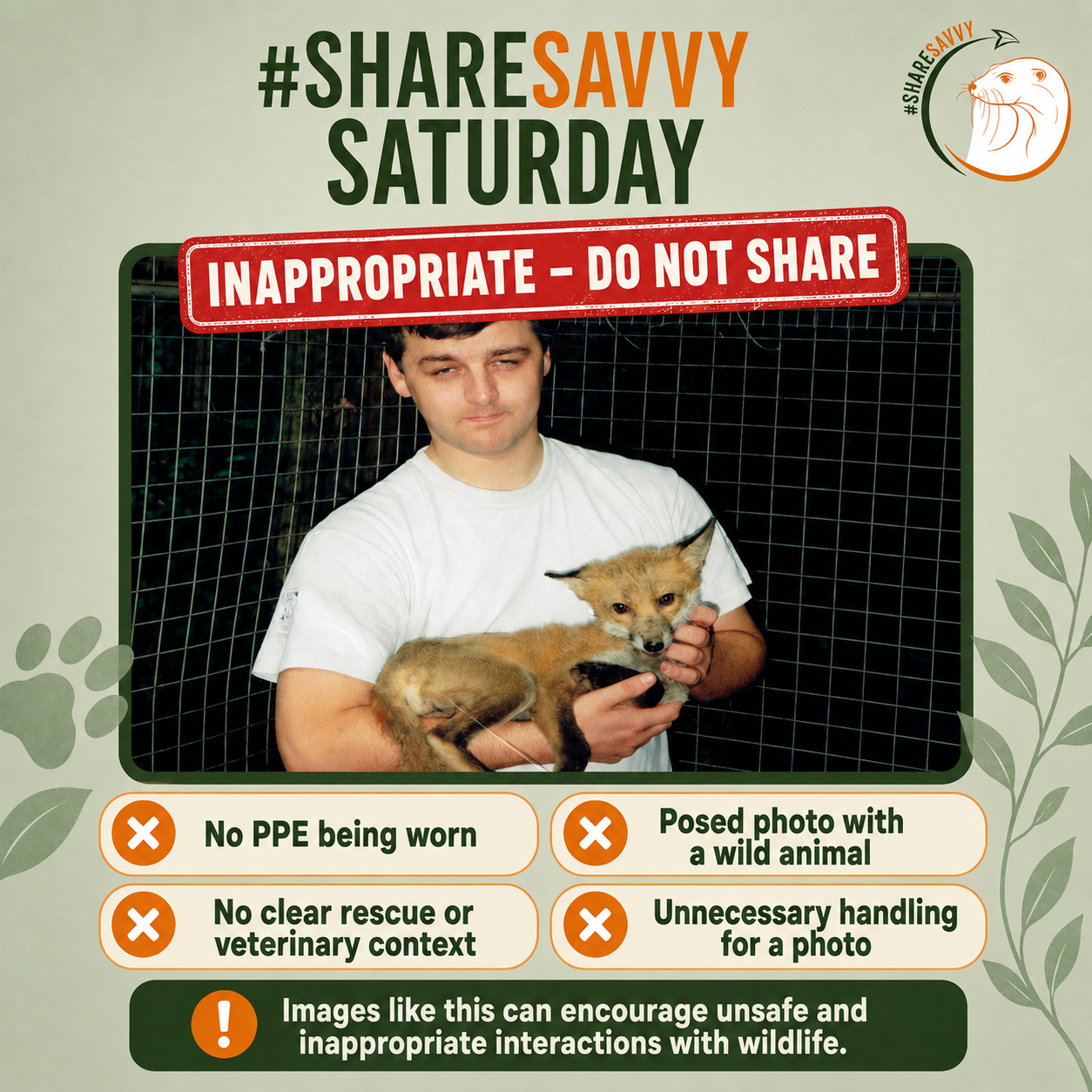
At East Sussex WRAS, we recognise that some photographs shared many years ago would be approached differently today. Although the animals may have been legitimately in care, posed images, unclear rescue context or a lack of visible PPE can still send the wrong message.
Being ShareSavvy is not about pretending we have always got everything right. It is about reflecting, learning and promoting better standards now.
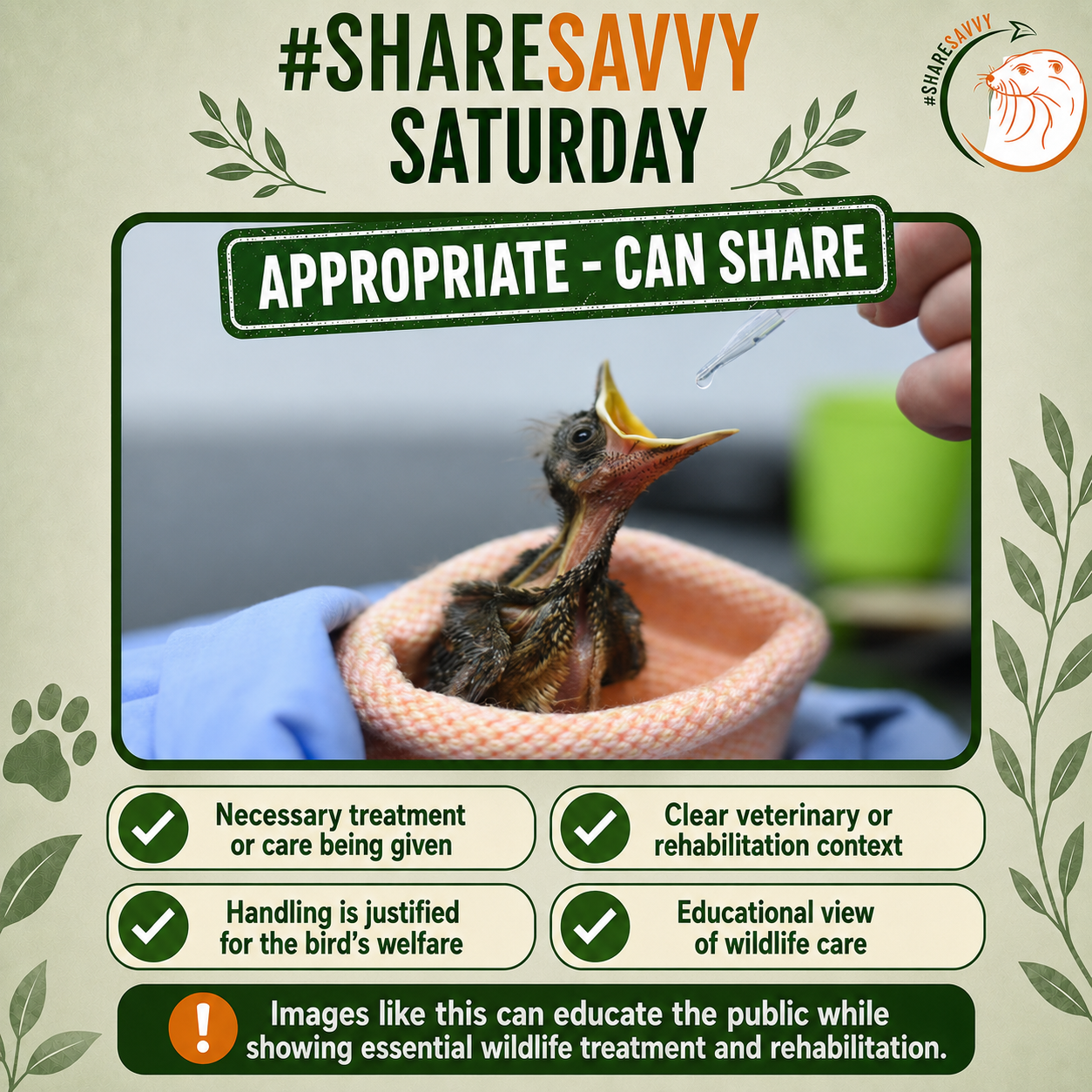
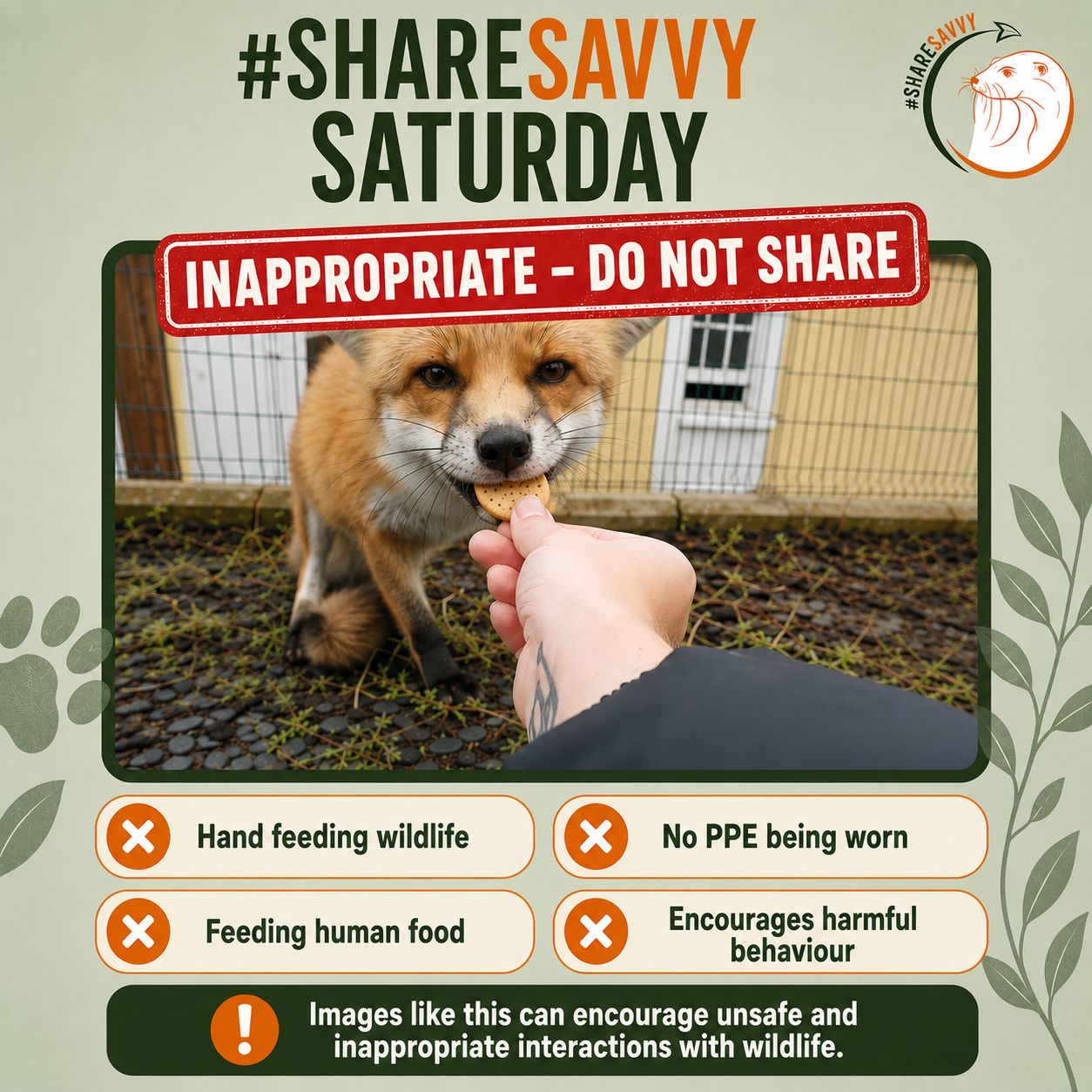
Responsible wildlife content can inspire people to care about nature, support conservation and understand the work of rescue and veterinary organisations.
A like, comment or share may seem small, but together our choices influence the kind of wildlife content people create.
Learn more and view the official ShareSavvy flow chart at:
This ShareSavvy Saturday, please help us promote respectful, responsible and welfare-led wildlife content.
Think before you like, comment or share.
WRAS often sees the consequences and suffering caused by inappropriate action/care, please support our vital ethical work helping to support our local wildlife: https://wildlifeambulance.short.gy/LlobLE